The meaning of sweet sixteen is simple: it marks a recognised step from childhood towards greater independence. It does not automatically mean adulthood, nor does every family treat it as a formal coming-of-age ceremony. Still, the milestone often carries more emotional weight than an ordinary birthday.
That changes the gift brief. Rather than buying the biggest gadget within reach, choose something that recognises who the teenager is becoming: a useful upgrade, a shared bit of fun or a keepsake with a story behind it. If they already own the obvious gadget, gift the adjacent benefit instead.
What sweet sixteen actually signifies?
The phrase "sweet sixteen" is best known through North American birthday traditions and popular culture. Historically, it was often associated with girls, parties and a symbolic step towards young adulthood. Modern celebrations are much broader: any 16-year-old can mark the occasion, and the event might be anything from a large party to a quiet family dinner.
It is not a universal rite with a fixed set of rules. Its importance depends on the teenager, their family and their cultural background. That flexibility is helpful for gift buyers because you are not required to produce jewellery, a grand gesture or something impressively expensive.
For most recipients, the milestone reflects three overlapping ideas:
- Identity: their interests, style and values are becoming more defined.
- Independence: they are gaining more say over their time, hobbies and future.
- Memory: milestone birthdays tend to be remembered long after ordinary presents blur together.
If you want the fuller backstory before choosing, explore Gift Ideas The Origin Of Sweet Sixteen. The useful takeaway is that a good gift should acknowledge growth without pretending the recipient has suddenly become a fully organised adult. Nobody needs that sort of pressure at sixteen.
Let the milestone set the gift brief
A sweet sixteen present has two jobs. It should suit the person now, but it can also nod towards what comes next. The right balance depends on recipient fit, relationship and occasion pressure-not on how dramatic the party decorations happen to be.
Start with five practical questions:
- What do they choose for themselves? Look at hobbies, routines and genuine enthusiasms rather than passing trends.
- What are they growing into? A new creative interest, study routine, social activity or practical responsibility can reveal a useful direction.
- How close is your relationship? Parents and grandparents can usually give something more personal than a classmate or distant relative.
- Will they use it privately or socially? A quiet hobby gift and a party game perform completely different jobs.
- Can you picture the first use? If you cannot imagine when, where or why they would use it, the gift may be clever only in theory.
Consider the creative teenager who spends weekends making things. A hands-on project may recognise their curiosity better than another phone accessory. For the social organiser, an activity gift can create a memory with friends. A sentimental minimalist may appreciate one thoughtful keepsake, while a practical recipient might prefer an everyday object that happens to have a little personality.
That is the trick: begin with their life, then choose the category. Doing it backwards is how gift drawers acquire their fifth mysterious charging cable.
Compare practical, playful and keepsake gift paths

Most sweet sixteen ideas fall into three main lanes. None is automatically better; each carries different category trade-offs. A fourth hybrid lane can work when you want usefulness without making the occasion feel suspiciously like a stationery restock.
| Gift path | Details |
|---|---|
| Practical |
Best for: Routine-led teenagers, minimalists and recipients with a clear need Main strength: Likely to be used beyond the birthday Main risk: Can feel ordinary or overly parental Make it feel personal: Match an exact habit, room, hobby or upcoming activity |
| Playful |
Best for: Social, curious or humour-loving recipients Main strength: Creates immediate fun and shared memories Main risk: Novelty can fade or embarrass the wrong person Make it feel personal: Choose humour and activities they already enjoy |
| Keepsake |
Best for: Close family relationships and sentimental recipients Main strength: Gives the milestone lasting emotional meaning Main risk: Taste, display space and clutter can be difficult to judge Make it feel personal: Add a date, memory or note explaining its significance |
| Practical-playful hybrid |
Best for: Buyers who want low risk without being dull Main strength: Combines everyday use with surprise Main risk: Can become a compromise if neither side fits well Make it feel personal: Pick one clear use case and one distinctive detail |
A practical gift need not be beige in spirit. For someone who regularly keeps a drink beside their study or hobby space, a visually playful everyday item such as The Floating Mug offers a more memorable direction than another plain household basic. The recipient's routine is doing the selection work; the novelty simply gives it birthday energy.
Likewise, playful does not have to mean loud. A puzzle, tabletop activity or project can be fun without turning the recipient into the unwilling star of a public joke. Keepsakes do not need to be ceremonial, either. Their value comes from the story attached to them, not from how solemnly they sit on a shelf.
If they already own the basic gadget, gift the adjacent benefit
Sixteen-year-olds often already have the obvious basics: a phone, headphones, gaming gear, drinkware or a collection of small electronics. Buying another item in the same category can create compatibility problems, duplication or a polite "Thanks!" followed by permanent drawer residency.
The better move is replacement logic. Keep the interest, but change the gift's job. If they enjoy technology, for example, browse electronics and gadgets by how the item will be used rather than by how futuristic it looks.
| If they already own... | Details |
|---|---|
| A phone and common accessories |
Avoid defaulting to...: Another unknown cable, holder or device-specific add-on Choose this adjacent direction instead: A standalone desk helper, project or social activity Why it works: It supports the routine without duplicating the hardware |
| A gaming setup |
Avoid defaulting to...: An unrequested controller or headset Choose this adjacent direction instead: A tabletop challenge or one of the Family Games suited to their group Why it works: It extends play beyond the existing screen |
| Basic electronics |
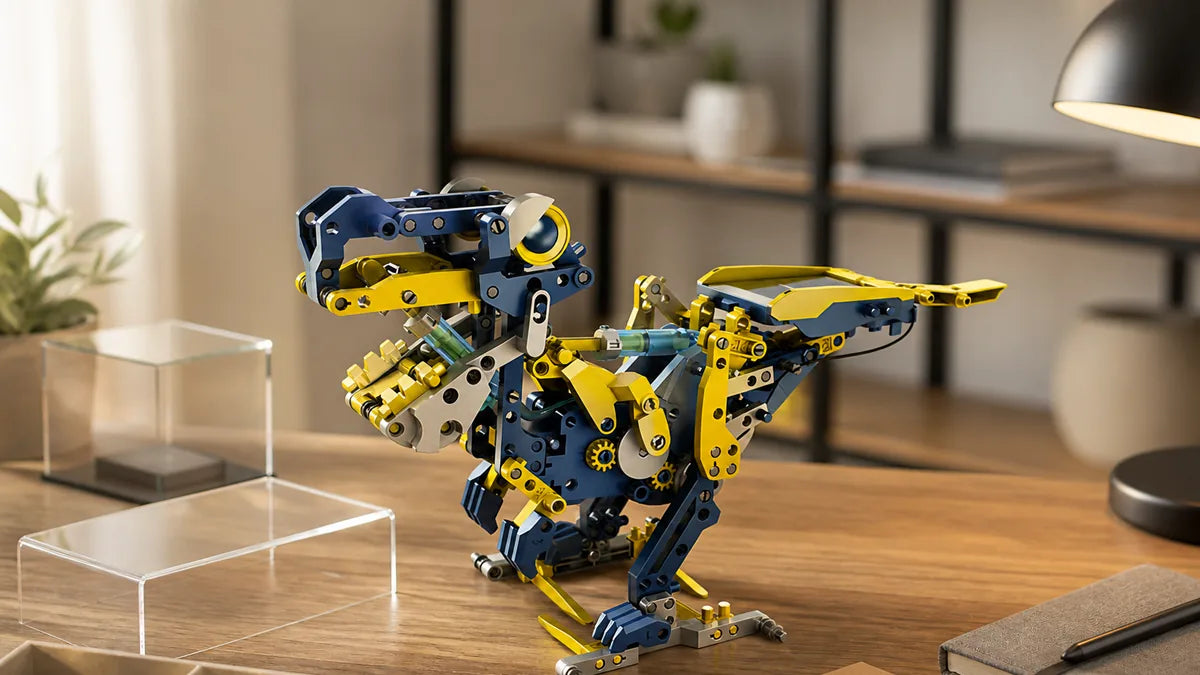
Avoid defaulting to...: A slightly different version of the same gadget Choose this adjacent direction instead: A hands-on build experience, such as the 12 in 1 Solar Hydraulic Robot Kit, when making and experimenting suit them Why it works: It turns interest into participation |
| Plain study-space drinkware |
Avoid defaulting to...: Another generic mug Choose this adjacent direction instead: A more distinctive everyday-use design Why it works: It upgrades a familiar routine without adding complexity |
| A growing collection |
Avoid defaulting to...: A surprise duplicate or unrelated character Choose this adjacent direction instead: Display support, storage help or a keepsake connected to the collection's story Why it works: It respects the interest while controlling clutter |
This approach works because it recognises why they like the original category. Someone who loves technology may enjoy building, organising or experimenting more than owning gadget number seventeen. A gamer may value time with friends more than another peripheral. A collector may appreciate better display planning more than an object that has nowhere to live.
The result feels familiar enough to be relevant and different enough to earn its place. That is a rather useful sweet spot-pun only mildly intended.
Match the spend to the relationship, not the party size

A large celebration can create pressure to give a large present, but the guest list is not a pricing guide. Budget comfort should follow your relationship with the recipient and your own circumstances. A modest, observant gift can carry more meaning than an expensive object chosen at random.
Use these relationship cues:
- Parent, guardian or grandparent: consider a useful upgrade, hobby support or keepsake with a family story. Check before choosing costly technology or anything that needs household approval.
- Sibling or close friend: shared humour, activities and interest-led gifts can work well because you know their everyday personality.
- Aunt, uncle or extended family member: choose one recognisable interest and keep the emotional tone warm rather than overly intimate.
- Classmate, teammate or family friend: a compact practical or playful gift is usually more comfortable than an extravagant statement.
- Group of friends or relatives: combine budgets only when there is a clearly wanted item and someone has checked the details.
For a thoughtful but restrained route, gifts under $30 can help narrow the field without turning budget into an apology. Add a short note explaining why you chose the gift. That sentence can transform "useful object" into "you noticed what I like", which is excellent value for a piece of card.
Be wary of overspending to manufacture significance. An expensive mismatch can create obligation, compatibility headaches or a household negotiation. The milestone matters, but it does not require a financial fireworks display.
Run a buyer-confidence check before committing
The best category can still be wrong for the individual. Before buying, test the idea against personality, setup requirements, storage and duplicate risk. This is especially important for electronics, project kits, games and collectables, where one small missing detail can turn delight into admin.
| Gift path | Details |
|---|---|
| Practical or tech-led |
Who it suits: Someone with a clear routine, need or interest Who should skip it: A gadget-saturated recipient with no obvious use gap Setup or compatibility risk: Check device model, power needs, space, accounts and required accessories If they already have X, choose Y instead: If they own the basic gadget, choose a standalone project or use-case improvement |
| Activity or game-led |
Who it suits: Social recipients, curious problem-solvers and families who play together Who should skip it: Someone who dislikes group attention or complicated rules Setup or compatibility risk: Check likely player numbers, play setting and time commitment If they already have X, choose Y instead: If they have plenty of video games, choose a screen-free shared challenge |
| Keepsake or collectable-led |
Who it suits: A sentimental recipient or established collector you know well Who should skip it: A minimalist, private recipient or someone whose taste you are guessing Setup or compatibility risk: Check duplicates, shelf footprint, storage, display preferences and care needs If they already have X, choose Y instead: If they own plenty of memorabilia, choose display help or a personal memory instead |
A quick final test is to finish the sentence: "They will first use this when..." A convincing answer is a green light. If your answer contains "maybe", "once they download something" and "assuming it fits", pause and verify.
Also consider where the gift will be opened. A cheeky present shared privately between close friends may be fine; the same item presented in front of relatives, teachers or a camera can be a spectacular misreading of the room. Meaningful does not have to mean maximum attention.
Use a safe fallback path when the clues are thin

Sometimes the recipient has no wishlist, their parents offer only a heroic shrug and you have limited evidence beyond "they like stuff". A safe fallback path should lower practical risk while leaving enough personality to feel chosen.
Use this three-part filter:
- Standalone: it should not depend on a particular phone, console, app, size or collection unless you have checked.
- Easy to place: avoid bulky display pieces when you do not know their room or storage situation.
- Clear in purpose: the recipient should understand how they might use or enjoy it without a committee meeting.
From there, pick one of three directions. Choose a useful object with character for the practical recipient, a low-pressure shared activity for the social recipient or a small symbolic gift accompanied by a genuine note. If you still need a starting field, use the top-selling gifts collection to generate ideas, then apply the recipient and risk filters above. Popularity can start the shortlist; it should not make the final decision for you.
When all else fails, prioritise choice and acknowledgement. Cash or a gift card may be appropriate when the teenager is saving towards something specific, particularly if you include a personal message. The gift does not need to perform the entire milestone by itself.
Sweet sixteen gift FAQs
What does sweet sixteen mean?
Sweet sixteen refers to a 16th birthday treated as a milestone within adolescence. It commonly symbolises growing independence, a stronger sense of identity and the transition towards young adulthood, although its cultural importance varies between families.
Is sweet sixteen only for girls?
No. The phrase has historically been associated with girls in some traditions, but a 16th birthday can be celebrated meaningfully by anyone. Follow the recipient's preferences rather than forcing a gendered theme they may not identify with.
What should a sweet sixteen gift symbolise?
It can symbolise recognition, independence or memory. A practical gift says, "I support what you are doing next." A playful gift celebrates who they are now. A keepsake says, "This moment is worth remembering." The best symbol is the one that fits the recipient naturally.
How much should you spend on a sweet sixteen gift?
There is no compulsory amount. Spend according to your relationship, budget and the type of celebration. Parents or grandparents may choose a larger milestone gift, while friends and extended family can give something modest and thoughtful without diminishing the occasion.
What do you buy for a 16-year-old who already has everything?
Avoid buying another version of the obvious basic. Choose an adjacent benefit: a project instead of another gadget, a shared game instead of more gaming hardware, display support instead of another collectable or a personal note alongside a useful everyday item.
Ready to turn the meaning into a manageable shortlist? Browse the LatestBuy gift guide, compare one practical, one playful and one keepsake-style direction, then choose the option that best reflects who they are becoming.
For the next browse step, compare the fit against Gifts.