Useful novelty gifts do two jobs at once: they make the recipient smile, then keep helping after the wrapping paper has vanished. The best choices solve a small problem, improve an existing routine or create an activity people will genuinely repeat.
The trick is not to buy another version of the basic gadget they already own. Choose the useful, personal thing next to it: the organiser, task helper, hobby accessory, conversation-starting home item or game that fits how they live. That is how novelty earns its place rather than quietly joining the cupboard of forgotten good intentions.
What makes a novelty gift genuinely useful?
Novelty is not the opposite of practical. It is simply the playful layer: an unexpected shape, unusual purpose, clever mechanism or slightly ridiculous way of doing something ordinary. The real test is whether there is a reason to use it once the joke has landed.
Before choosing, run the gift through four quick filters:
- Routine: Can you picture when and where the recipient would use it?
- Relief: Does it remove a recurring annoyance, even a tiny one?
- Repeat value: Will it be useful or entertaining more than once?
- Footprint: Is it worth the space, charging cable, shelf room or cupboard territory it requires?
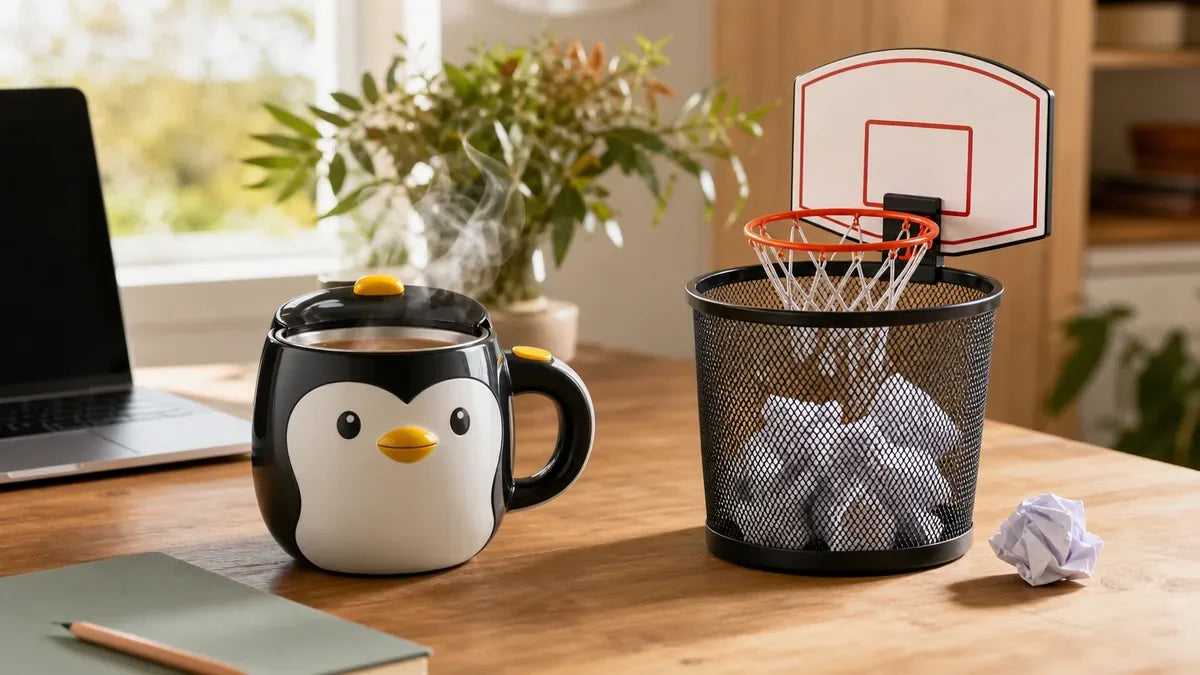
A quirky cable organiser can improve a desk every day. An unusual kitchen tool may make a fiddly job easier. A compact game can rescue a slow family gathering. Even a decorative lamp can be useful when it contributes real task or ambient lighting rather than existing solely to gather dust with flair.
That is the sweet spot to look for when browsing fun and frivolous gadgets: something surprising enough to feel gift-worthy, but grounded in a recognisable use. If you cannot complete the sentence "They will use this when...", keep browsing.
Use replacement logic when they already own the basics
Buying another basic gadget is tempting because it feels safe. Unfortunately, it can create duplication, compatibility problems or an awkward comparison with the version they already chose for themselves. Someone who owns decent headphones probably does not need mystery headphones. A keen cook may have very firm opinions about knives. Technology has a particular talent for turning a thoughtful gift into a port-shaped riddle.
Replacement logic avoids that trap. Instead of replacing the main item, improve the activity around it.
| If they already own the basic item | Details |
|---|---|
| Phone, tablet or computer |
Choose an adjacent gift instead: Cable control, charging organisation or a practical desk helper Why it is often a better fit: Supports devices they already use without pretending to know their exact upgrade preferences |
| Speaker, headphones or music player |
Choose an adjacent gift instead: Listening-room lighting, media care tools or music-themed activity accessories Why it is often a better fit: Adds personality to the ritual rather than duplicating hardware |
| Coffee maker or drinkware |
Choose an adjacent gift instead: Serving, storage, cleaning or preparation accessories Why it is often a better fit: Improves the routine without competing with their preferred equipment |
| Kitchen essentials |
Choose an adjacent gift instead: A single-purpose prep tool, clever serving item or tidy-up helper Why it is often a better fit: Targets an overlooked task instead of repeating the obvious gear |
| Games console or streaming setup |
Choose an adjacent gift instead: A tabletop game, puzzle or screen-free group activity Why it is often a better fit: Creates a different kind of entertainment with fewer technical assumptions |
| Camping or travel basics |
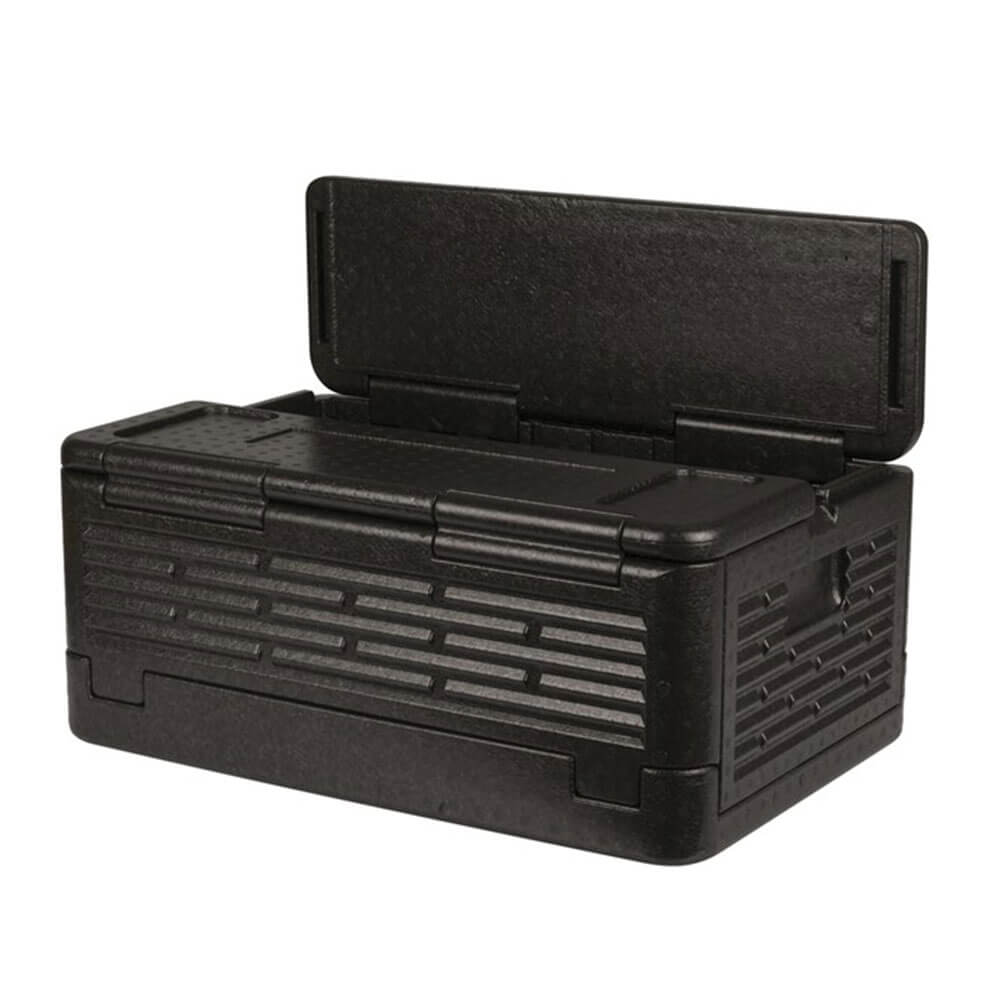
Choose an adjacent gift instead: A compact food, cooling, packing or comfort helper Why it is often a better fit: Solves a specific on-the-go annoyance rather than adding another generic travel item |
| Hobby starter kit |
Choose an adjacent gift instead: Care, organisation, lighting or precision tools Why it is often a better fit: Helps them enjoy what they own and signals that you noticed the hobby |
This approach works particularly well with electronics and gadgets. Start by identifying what is already established, then look for the missing support piece. You are not trying to out-spec the recipient. You are making their setup easier, tidier or more enjoyable.
The gift becomes more personal because it reflects observation. "I noticed you are always untangling cables" lands better than "I guessed which charger standard you use". One is useful attention; the other may require an adaptor and a brave face.
Match the gift to the recipient's real routine

Recipient fit matters more than novelty level. A bizarre-looking desk tool can be brilliant for someone who enjoys practical curiosities and completely wrong for a minimalist who keeps an empty work surface. Begin with behaviour, not a personality label such as "the funny one".
Look for evidence in the recipient's ordinary week:
- Desk and workspace: Consider cable management, compact lighting, small task tools, organisers or tactile desk gadgets. Check whether their workplace allows personal items and whether noise could annoy nearby colleagues.
- Kitchen and home: Focus on preparation, serving, cleaning, temperature checking or storage. Choose one clear job rather than an object that needs a lifestyle overhaul.
- Hosting and family time: Games, puzzles and simple activities are useful because they give people something to do together. Browse Family Games when the recipient enjoys gatherings more than objects.
- Travel and outdoors: Prioritise compact helpers for packing, food, cooling, visibility or downtime. Weight and storage matter; "portable" should mean it will actually leave the house.
- Making and hobbies: Look at care, precision, lighting, organisation and display. Hobbyists often own the headline gear but still tolerate awkward little workarounds.
- Relaxing at home: Mood lighting, low-effort entertainment and useful décor can work when you understand their room, colour preferences and available space.
The strongest clue is repeated friction. Listen for phrases such as "I can never find...", "this always gets tangled", "we never know what to do after dinner" or "I need better light for this". Those are gift briefs hiding in normal conversation.
If you know the routine but not the technical details, choose a self-contained gift. A game that needs no expansion, a tool with an obvious purpose or a home accessory that does not require an app carries less setup risk than something dependent on a particular device, size or system.
Let occasion pressure set the humour level
Occasion pressure changes what counts as a good novelty gift. A close friend's private birthday allows more personality than a public workplace exchange. A housewarming gift needs to coexist with someone's home. A milestone birthday may justify a statement piece, but only when you know the recipient actually likes statement pieces.
Use this quick occasion filter:
- Workplace or group exchange: Choose low-risk humour, compact size and an obvious function. Avoid gifts based on bodies, relationships, politics, alcohol or embarrassment unless the context is unquestionably appropriate.
- Housewarming: Favour kitchen, serving, lighting or home-use ideas. Check décor fit and available space before introducing a large object with main-character energy.
- Birthday: Personal routine and hobbies can lead the choice. This is a good occasion for an adjacent upgrade that shows you have paid attention.
- Milestone celebration: A playful statement gift can work, but practicality still matters. Choose something displayable, usable or linked to a shared memory.
- Kris Kringle or Secret Santa: Keep it self-contained, easy to understand and comfortably within the agreed limit. The gift should not require an instruction seminar.
- Close friend or family member: More pointed humour may be welcome because you understand the relationship and the likely audience.
For cheekier territory, browse entertainment and gag gifts with the recipient and setting in mind. A gag gift succeeds when the recipient enjoys the joke; it fails when the giver enjoys watching them endure it.
If occasion pressure is high and your information is thin, narrow the search through a broader LatestBuy gift guide first. That lets the occasion establish the boundaries before novelty enters wearing a novelty hat.
Compare practical, playful and statement-making paths

Most useful novelty gifts sit in one of three lanes. Knowing which lane you are buying from makes the category trade-offs much clearer.
| Gift path | Details |
|---|---|
| Practical with a twist |
Best for: Organised people, home cooks, travellers, makers and desk dwellers What creates value: Solves a small task in an unexpected way Main trade-off: Can feel less dramatic at unwrapping time Better than another basic gadget when...: They already have the main equipment but still deal with an annoying workaround |
| Playful activity |
Best for: Families, hosts, social groups and people who prefer experiences What creates value: Creates repeatable entertainment or interaction Main trade-off: Depends on having the right group and occasion Better than another basic gadget when...: Their existing entertainment setup is screen-heavy or solitary |
| Useful statement piece |
Best for: Expressive decorators, collectors and dedicated hobbyists What creates value: Combines function with visual personality Main trade-off: Requires confidence about taste, size and display space Better than another basic gadget when...: Their basics are covered and their room or hobby area needs character |
Practical with a twist is the safest route when you know the routine but not every preference. Think task lighting, organisation, preparation, storage or compact travel help. It may not produce the loudest unboxing reaction, but it has a good chance of being useful on an ordinary Tuesday.
Playful activity is ideal when the recipient values shared time. The object is only part of the gift; the real value is the social prompt. Check player numbers, age suitability, learning effort and whether the group prefers quick chaos or longer strategic play.
Useful statement pieces work when visual impact is part of the function. Lighting and distinctive home accessories can transform a corner while still serving a purpose. The risk is taste. If you have never seen their home or hobby space, do not volunteer to redesign it from afar.
When in doubt, favour the path with the clearest recurring use. Surprise is good. Surprise followed by "Where am I supposed to put this?" is less majestic.
Buy to budget comfort without buying filler
Budget comfort is not just the amount you can spend. It includes what feels appropriate for the relationship and occasion. An overly expensive novelty gift can create obligation; a pile of cheap fillers can create clutter. Neither is automatically more thoughtful.
Use the budget to sharpen the decision:
- Small budget: Choose one compact item with one obvious purpose. Desk helpers, kitchen problem-solvers, travel accessories and simple activities can feel considered when the use case is precise.
- Moderate budget: Look for a more substantial routine upgrade, a reusable group activity or a distinctive home item with genuine function.
- Larger budget: Spend only when you know the hobby, setup or space well. Specialist tools and statement pieces carry more preference and compatibility risk.
For a defined lower-cost browse path, gifts under $30 can help prevent budget creep. Apply the same usefulness test rather than treating the price filter as permission to collect random objects.
Also count the hidden costs. Does the gift need batteries, refills, replacement parts, extra accessories or permanent bench space? Does it require the recipient to download an app, create an account or learn an elaborate system? A modest self-contained gift can provide better value than a grander one that arrives with homework.
The aim is one strong reason to keep it-not several weak reasons to unwrap it.
Check compatibility, clutter and buyer confidence

A useful novelty gift should fit the recipient's life without requiring renovation, technical support or a diplomatic storage negotiation. Before committing, check size, power requirements, age suitability, care, portability, noise, shared-home impact and whether any extra parts are needed.
This compact buyer-confidence module helps identify both fit and risk:
| Gift route | Details |
|---|---|
| Tech-adjacent utility |
Who it suits: Regular device users with a visible desk or charging problem Who should skip it: People with tightly controlled setups or unknown device standards Setup or compatibility risk: Medium; check connectors, power and dimensions If they already have X, choose Y instead: If they have the core device, choose organisation, care or a self-contained desk helper |
| Kitchen or home helper |
Who it suits: People who cook, host or enjoy practical home upgrades Who should skip it: Minimalists or anyone with very limited storage Setup or compatibility risk: Low to medium; check size, care and food-contact suitability If they already have X, choose Y instead: If they own the main appliance, choose preparation, serving or cleaning support |
| Game or activity |
Who it suits: Social households, families and hosts Who should skip it: People who dislike rules or rarely gather with others Setup or compatibility risk: Low; check age range, group size and learning effort If they already have X, choose Y instead: If they have plenty of screen entertainment, choose a screen-free shared activity |
| Functional décor |
Who it suits: Expressive decorators and recipients with known tastes Who should skip it: Small-space households or people whose style you do not know Setup or compatibility risk: Medium; check dimensions, power and display location If they already have X, choose Y instead: If they have standard lighting or décor, choose one distinctive piece for a known space |
| Gag gift |
Who it suits: Close relationships with shared humour Who should skip it: Work contacts, sensitive situations or uncertain audiences Setup or compatibility risk: Usually low technically, high socially If they already have X, choose Y instead: If they own plenty of joke items, choose a practical object with subtler humour |
When uncertainty remains, use a safe fallback path: self-contained, non-sized, compact, easy to understand and linked to a routine you have actually observed. Avoid intimate humour, specialist compatibility and giant display pieces.
If you need a confidence check on what other gift buyers commonly explore, the top-selling gifts collection can provide a useful comparison point. Do not copy the crowd blindly; use it to test whether your choice feels accessible enough for the recipient and occasion.
Frequently asked questions about useful novelty gifts
What counts as a useful novelty gift?
A useful novelty gift has an identifiable purpose beyond the initial laugh. It might organise a desk, assist with food preparation, improve a hobby setup, add functional lighting or create a repeatable group activity. The design can be unusual, but the use should be easy to explain.
How do I choose for someone who already has the basic gadgets?
Do not replace their main device unless you know exactly what they want. Choose an adjacent gift that improves how they use it: organisation, care, lighting, storage, comfort or an alternative activity. This reduces duplication and compatibility risk while making the gift feel more observant.
Are gag gifts appropriate for work?
Only when the humour is low-risk and the recipient will be comfortable opening it publicly. Avoid sexual, insulting, political, body-based or alcohol-focused jokes unless the workplace context clearly supports them. A compact practical item with a playful design is usually safer than a prank.
How can I avoid buying novelty clutter?
Picture the gift in use and ask where it will live between uses. Check size, storage, maintenance and whether it duplicates something the recipient owns. If you cannot identify a routine, activity or display space for it, choose a smaller and more functional alternative.
What is the safest option when I do not know their setup?
Choose something self-contained that does not rely on a device model, clothing size, app, subscription or specialist accessory. Simple home helpers, compact desk tools, games and broadly useful travel items usually involve fewer assumptions than technical upgrades.
Follow the most useful gift path
Start with one sentence: "They already have the basic item, but they could use help with..." The answer might be organisation, care, comfort, hosting, travel, hobby setup or screen-free fun. That gap is your route to a novelty gift that will earn its keep.
Ready to compare a few directions? Browse LatestBuy's gift discovery paths by recipient, occasion, category and budget, then choose the option with the clearest real-world use. The laugh is the bonus. The usefulness is what gets it invited to stay.
For the next browse step, compare the fit against electronics and gadgets.