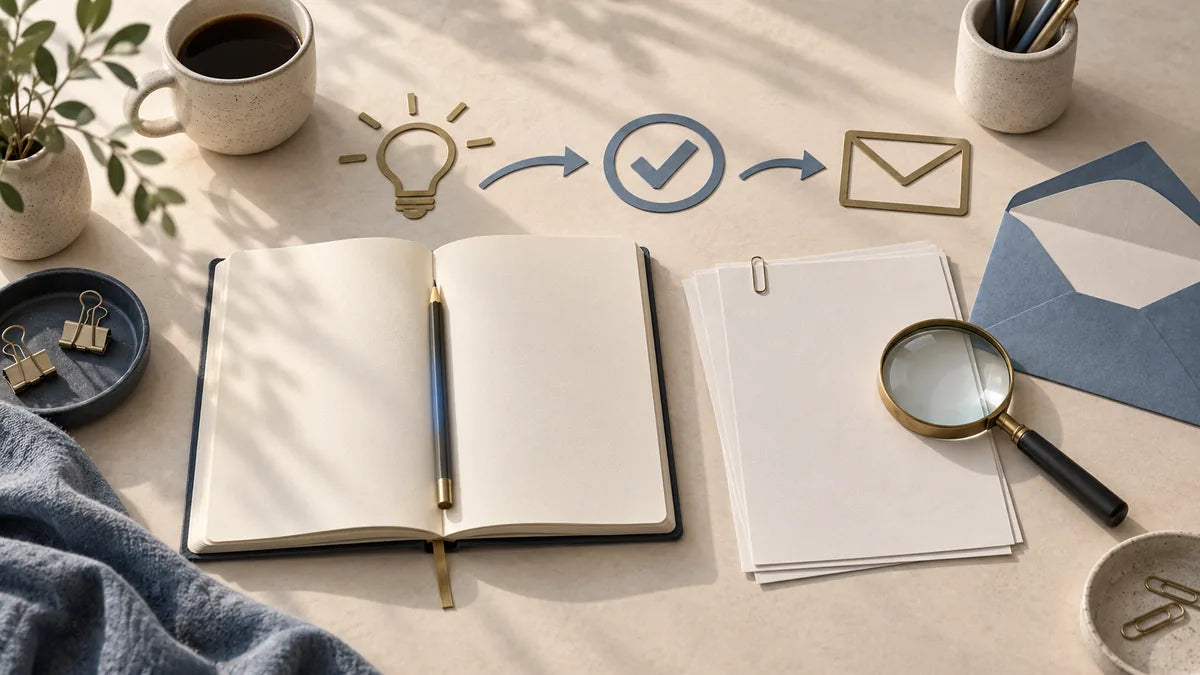
Before a gift idea becomes a published recommendation, confirm exactly what it is, which details support your angle and what still needs checking. Keep product facts separate from editorial judgement, and establish permission before using supplied imagery.
For journalists, editors, producers and commerce writers, the LatestBuy press centre is the starting point for media enquiries. A focused brief should explain your audience, story angle, market and deadline - not just ask for something interesting.
To see how that works, imagine you're preparing a gift guide for people buying for hosts. The commission calls for useful surprises, the deadline is approaching, and you haven't yet verified any individual products. Here's how that uncertain beginning becomes a defensible editorial choice.
What does this gift-guide commission actually need to solve?
The working headline is broad: Gifts for people who love having everyone over. It sounds promising, but it leaves several different stories jostling for space. Are readers buying for enthusiastic cooks, regular game-night organisers or friends hosting their first gathering?
You clarify the assignment before opening more tabs. For this walkthrough, the intended reader is buying for someone who enjoys relaxed evenings with friends. The guide needs to help them choose something that makes sense in that setting, rather than simply finding an object with a novelty factor.
That distinction changes the reporting. A gift intended for shared use raises questions about group size, participants and setup. A practical household item raises different questions about space, compatibility and whether the recipient would actually use it.
You also separate the commissioning deadline from the reader's occasion. Copy might be due this week, while the gift is needed later. Neither date establishes when an order could arrive.
Your revised working brief is now specific enough to guide research:
> Help readers choose a gift for a host who enjoys doing something with their guests, with clear guidance on suitability, practical limitations and budget.
This is still an editorial proposition - not a claim that any particular item meets it. But now you know what evidence would make an inclusion worthwhile.
Which angle survives the first research pass?
Two directions emerge: a shared activity for the gathering, or a useful gadget for the host. Both could serve the commission, but they would produce different stories.
You explore LatestBuy's family games collection as a research starting point for the shared-activity angle. The category gives you somewhere relevant to investigate; it does not establish that every item suits every household. You would still need to check the intended ages, participant numbers, rules and any other conditions affecting your recommendation.
The electronics and gadgets collection provides a different research route. Here, the story would depend more heavily on the recipient's routines and setup. Power requirements, compatibility, dimensions and included components might determine whether a seemingly useful idea makes sense.
For this particular brief, the shared-activity direction is closer to the reader's problem. You know the recipient likes bringing people together; you know much less about their devices or household equipment. That is a reason to prioritise one angle, not a verdict that games are universally better gifts than gadgets.
Your working shortlist therefore contains editorial possibilities rather than publishable picks: a game-focused guide, or a practical-hosting feature requiring more information about the recipient.
You pursue the first. The headline becomes Choosing gifts for hosts who enjoy games after dinner. Less sweeping, more useful - and considerably easier to report honestly.
What needs verifying before an idea earns a recommendation?

Once the angle is clearer, the temptation is to start writing descriptions. Resist it briefly. A polished paragraph can make an unresolved assumption look surprisingly official.
For each potential inclusion, first establish the exact item or variant. Similar names, different editions and alternative configurations can make it easy to attach the right fact to the wrong product. Record the relevant URL alongside the detail you intend to use, its source and the date checked.
Then investigate the facts that matter to this story. For a game-focused feature, that could include participant numbers, age guidance, how play works, what is included and any separately required items. If a source does not establish a detail, leave it unresolved rather than inferring it from photography or a category label.
Keep the limits of each source visible. A retailer listing can support what the listing states. It cannot establish that your publication tested the item, that every player will enjoy it or that it outperforms alternatives.
Budget needs the same care. LatestBuy's under-$30 collection can help focus budget-led research, but a collection label is not a substitute for checking the exact item close to publication. If your guide promises a strict spending ceiling, decide whether that ceiling concerns the item price or the reader's total purchase cost. Make the distinction clear.
Current pricing and availability are time-sensitive checks, not durable product characteristics. Confirm them near publication where they affect an inclusion. If timing matters, investigate dispatch and delivery separately; neither a product suggestion nor a screenshot establishes arrival by an occasion.
Finally, examine your adjectives. "For hosts who enjoy a shared activity" describes an editorial audience. "Perfect for every family" makes a much broader suitability claim. If you cannot explain the evidence behind the wording, narrow it-or remove it.
What should go into the LatestBuy media enquiry?

You now have a useful request: help establishing which, if any, potential inclusions can support a game-focused gift guide for hosts. That is more actionable than asking for a selection of "best gifts".
LatestBuy lists marketing@latestbuy.com.au as its press contact. Check the press centre for current contact details before sending. Its requested information fields give your enquiry a practical structure:
- Name: Identify yourself so the request has a clear editorial owner.
- Outlet: Name the publication, programme or platform commissioning the coverage.
- Work email: Provide your professional contact address.
- Deadline: Give the date, time and time zone for the information you need. Distinguish this from the expected publication date.
- Story or theme: Explain the proposed angle. Here, it is gifts for hosts who enjoy games after dinner - not an unrestricted general gift roundup.
- Audience and market: Describe the intended readers and the market the coverage serves. Include relevant budget boundaries and suitability requirements.
- Requested products or assets: Specify the factual confirmations, product suggestions, company information or media materials you are seeking.
- Supporting URL (where relevant): Include links that identify a potential item or help explain the proposed coverage.
Those are preparation fields, not a reason to send a long questionnaire. Put the essential story context first, then group the questions that could affect inclusion.
For example, explain that you need to establish suitability for the intended gathering, confirm what is included and understand any material limitations. If you already have candidates in mind, attach each question to the relevant URL. If not, describe the use case rather than treating a suggestion as a promise of availability.
State the intended use of any requested assets, too. An image for a website article, a print layout and a promotional post are different proposed uses; do not leave the recipient to guess.
LatestBuy aims to respond within one business day. That is an aim, not a guaranteed turnaround; timing depends on the request, deadline and approved-use requirements. Your publication plan should still work if a question remains unanswered.
Can the images enter the layout yet?
While the enquiry is being considered, your editor asks for a draft layout. This is where a separate verification task begins: permission to use an asset.
Finding a suitable image does not establish unrestricted publishing rights. LatestBuy's press centre describes imagery and supporting materials for agreed editorial use. Confirm the proposed use, any required credit, relevant conditions and the caption details before placing an asset in the publishable version.
Match the image to the exact subject of the copy. A photograph of another variant, an older edition or a different configuration can undermine otherwise careful reporting. Check that the caption does not introduce claims absent from the verified text.
Keep image supply separate from assessment. Receiving photography does not mean your publication tested a product, and requesting information does not create an entitlement to a sample. If the article requires hands-on conclusions, those conclusions need their own reporting.
For now, the layout can use clearly marked internal placeholders. If permission or a suitable asset is not confirmed by deadline, choose another lawful visual treatment or revise the layout. Do not let an attractive empty space pressure you into assuming permission.
And if the introduction has become a guide to choosing gifts rather than a product roundup, make the imagery reflect that. It should help explain the editorial decision, not imply that unverified items have earned recommendations.
What can you confidently file when the deadline arrives?

Return to the commission, not just the open tabs. The original idea was a broad roundup for anyone who enjoys hosting. Your research has produced a narrower, more useful direction: choosing a gift for someone who likes games after dinner.
In this walkthrough, no individual product has yet been verified. The defensible final choice is therefore a category-led selection article, not a named-product roundup dressed up with confident adjectives.
That article can explain the decisions readers need to make: who will participate, whether the host enjoys learning rules, what the gathering usually looks like and what practical constraints could affect the choice. It must not invent characteristics for individual items or imply first-hand testing that did not happen.
Before filing, read the headline, introduction, captions and links as one piece. A cautious body paragraph cannot repair a headline promising universal suitability. Nor should a caption quietly add an unsupported age claim or an image imply a bundle the copy never describes.
If verified item-level evidence becomes available in time, assess each potential inclusion against the same brief. A supplied suggestion still has to earn its place. If the evidence remains incomplete, keep the category-led treatment or remove the affected recommendation; do not turn silence into confirmation.
You finish with a clearer story and a focused media enquiry: a defined audience, a useful angle, a market, a deadline and specific questions. The guide may be less sweeping than the first headline, but it gives readers something better than a confident guess - and gives LatestBuy a precise brief to consider.
For the next browse step, compare the fit against LatestBuy gift guide and Top Selling Gifts.